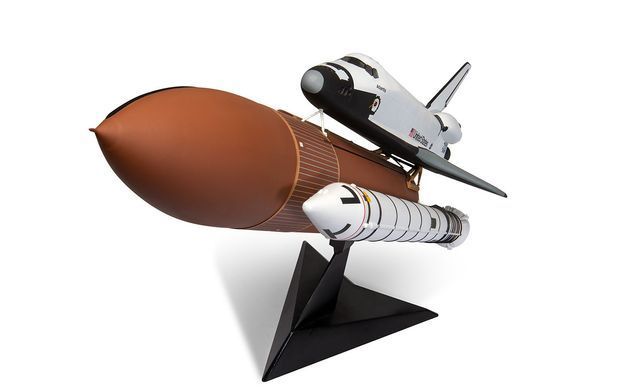
Without a doubt, one of the most impressive sights that a person can witness is the spectacular launch of a powerful rocket-powered spacecraft, whether in person or, more likely, on our television screens.
After the success of NASA’s Apollo program, the next phase of space exploration was the development of a partially reusable low-Earth orbit space transportation system that would allow more astronauts to travel into space, pushing the boundaries of engineering excellence.
For this combination of spacecraft to function properly, a million individual components had to work in harmony. Over the course of 30 years, five of these space shuttles successfully reached low-Earth orbit, with Discovery being their most active craft.
This incredible spacecraft completed 39 flights and spent 365 days in space.
Space exploration is one of humanity’s greatest achievements. With man’s first steps in space and on the Moon, the future of Earth was set on new tracks. However, the first rockets designed for space travel could only be used once, which led to increased expedition costs. It soon became clear that the successful conquest of space could not continue with such expensive technology. In 1972, NASA, the American space agency, began research into a reusable spacecraft. The result of the project was a combination of a rocket and an aircraft known as the space shuttle. The shuttle, with its huge fuel tank, could be launched into space thanks to the power of three of its own engines and two booster rockets. The shuttle itself is about the size of a medium-sized airliner, carrying a crew of about seven people, most of whom are cargo. The space shuttle fleet gave us new opportunities to develop our activities in space. Satellites can be launched into orbit by space shuttles, as well as components of space stations that can in the future be used as launching pads for further space exploration.