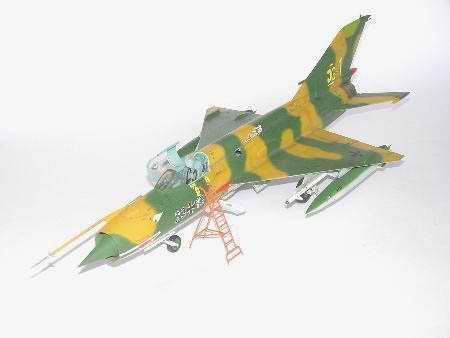
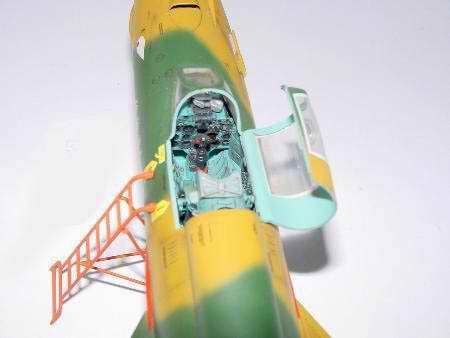
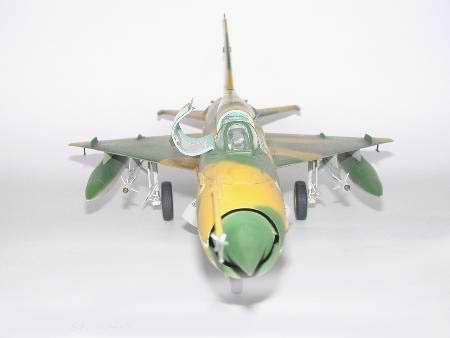
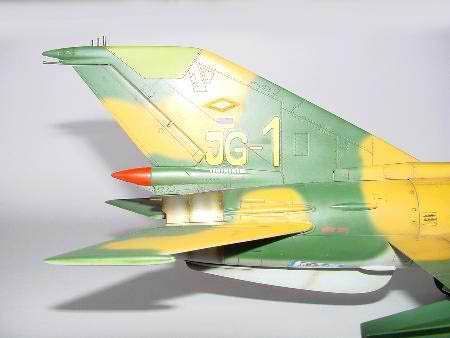
The MiG-21 (NATO reporting name: Fishbed) is a Soviet light fighter with a duralumin semi-shell structure, a mid-mounted wing with a triangular blade with a sweep angle of 57 degrees. The prototype flight took place on June 16, 1956. The prototype of the MiG-21 is considered to be the E-5 prototype with an RD-11 engine. After its flight, several other prototypes were created, which, by the way, broke various international speed records. The experience gained was used to improve the E-5, and finally the aircraft was sent into serial production under the name MiG-21F-13 in 1959. There are more than a dozen basic versions in production, and together with various subversions, the number of types of the MiG-21 can be estimated at several dozen! The most important of them is the first serial MiG-21F. It replaced the MiG-21PF version with the RP-21 radar and the R-11F2 engine. The next development is the MiG-21R, that is, a reconnaissance aircraft. Several training versions were also created, the first of which is the MiG-21U-400. The MiG-21 turned out to be a very successful design, with excellent flight characteristics, easy to pilot and cheap to produce. The quality of the design is evidenced by the fact that in the 90s, developments of this aircraft, which was over 30 years old, appeared. The machine was exported to all the countries of the former Warsaw Pact and a whole host of Arab and African countries. The MiG-21 participated in most of the armed conflicts of the 1960-1980 period, in particular in the Vietnam War, in the Six-Day War (1967), in the Iran-Iraq War (1980-1988). Technical data: length: 13.46 m, wingspan: 7.15 m, height: 4.1 m, maximum speed: 2130 km/h, climb rate: 120 m/s, maximum flight range: 1100 km, maximum ceiling 19000 m, armament: stationary - one 23 mm GSz-23 cannon (version M), suspended - up to 2000 kg of cargo.