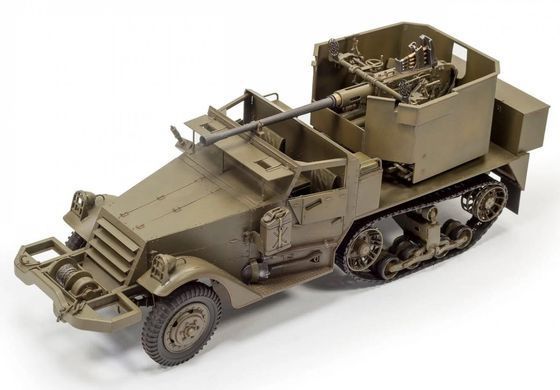
The M15 Special 40mm CGMC (Combination Gun Motor Carriage) is an American self-propelled anti-aircraft gun (ASG) of the Second World War, armed with a combination of a 40mm Bofors automatic cannon and a .50 caliber (12.7 mm) machine gun. It was designed to provide mobile anti-aircraft support for ground units, although it was also effective against ground targets due to its significant firepower. The vehicle was based on the chassis of the M3 or M5 (Stuart) light tank, which provided it with relatively good mobility on the battlefield. The M15 was one of the elements of the CGMC family of vehicles, which also included the M16 (equipped exclusively with four .50 caliber twin machine guns) and other variants. Production of the M15 began in 1943, and these vehicles were used by the United States Armed Forces in various theaters of war during World War II, including Europe and the Pacific. Although its primary mission was to combat air threats, practical use showed that it was also effective against infantry and lightly armored ground targets. After the end of the war, as anti-aircraft technology and mobility requirements evolved, the M15 and other CGMC vehicles were gradually withdrawn from service, being replaced by more modern anti-aircraft systems. Despite this, the M15 remains an interesting example of military technology of its era and is a popular subject among modelers and military historians.